
WORDS: ANDREW LAWN
PHOTOGRAPHY: THEO MCINNES
Science tells us the biggest bang of them all, started small. Tiny. Minuscule even. A speck, into which everything was rammed together. Too close together. And so, when the time came to separate, it was dramatic. Explosive. The proximity of before, replaced by a distance so vast, it would forever remain unbridgeable.
Some years later, something similar happened in Seville.
As ever with Spanish football, the facts pertaining to exactly what happened are contentious. Ambiguity reigns supreme and, over a century on, debate continues to rage.
What everyone can agree on, is that it all begins with the formation of Sevilla FC. This happened - and this is where agreement starts to fade, in 1890 - or 1905 - depending on who you talk to and whether you take the decision to start a club, or the legal registration of that club as your starting point.
Initially, Sevilla FC only had one other club in Spain to play against, Huelva, who they met annually. But then, in 1907 another club appeared in the city; ‘Sevilla Balompié, formed by a group of students, whose families had military backgrounds. At the time, Sevilla FC, having been founded by wealthy businessmen and industrialists, primarily from Britain, were seen as the club of the upper classes. The students wanted a football club that represented the people of the city and Andalusia, hence the name; Sevilla Balompié - rather than the Spanish-English fusion, ‘futbol’.
Betis FC would follow in 1909 or 1910. The often told story is that their formation was sparked by the board of Sevilla FC refusing to sign a player from a working class background. The refusal led to a split within the board of directors and Betis FC was formed.
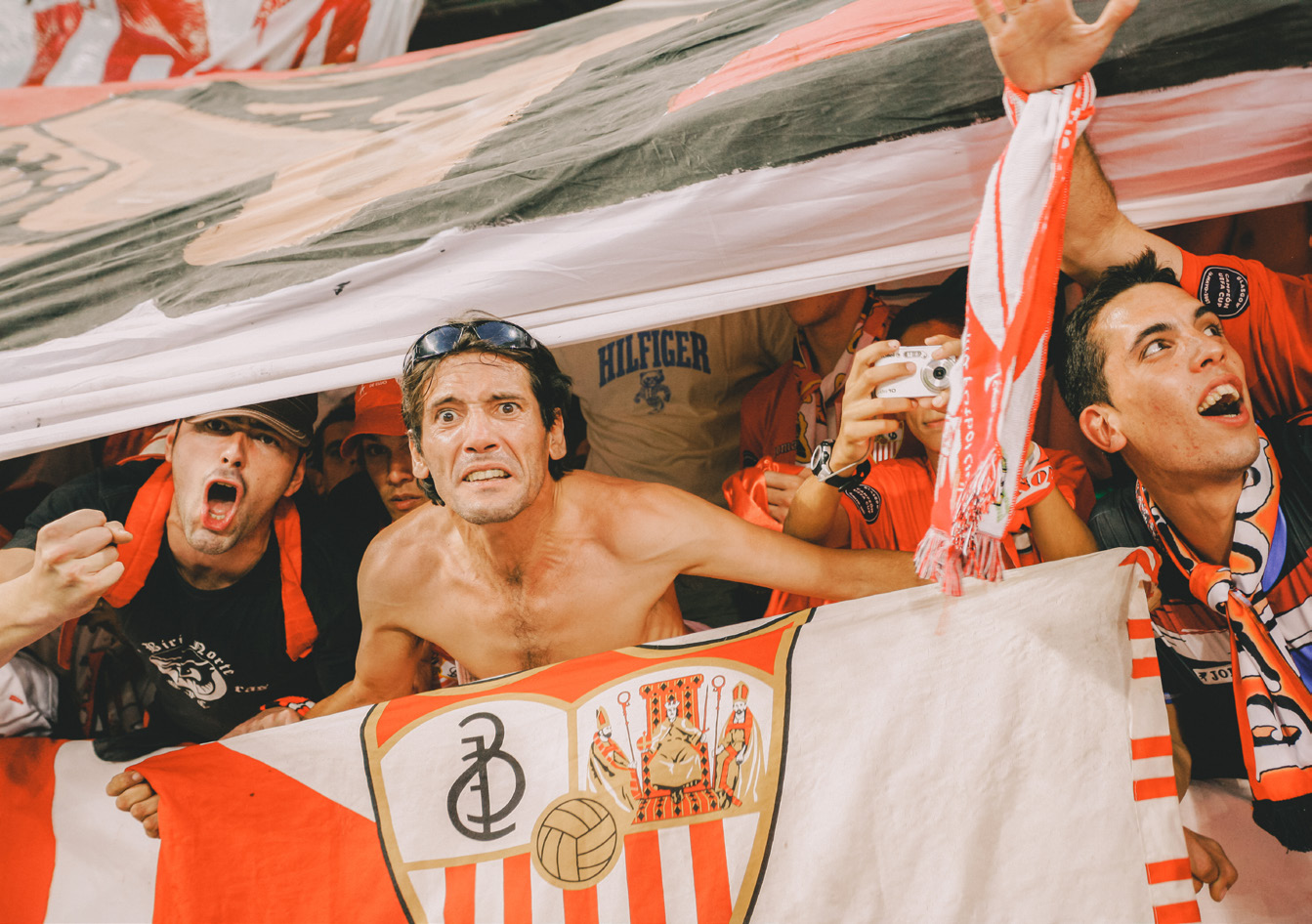
Sadly, there is no contemporary evidence for the story being true and the claims can only be dated to 1958. Another story runs that Betis FC were formed by a split from within Sevilla Balompié, although this too can’t be verified. However, the class divide story is a good one and plays strongly into the way the two clubs are still perceived and what they represent to their fans.
In December 1914, Betis FC and Sevilla Balompié merged, to form Betis Balompié - King Alfonso XIII granted his royal patronage and Seville had its second major club; Real Betis Balompié.
The first derby between the two sides in their current forms, took place on 14 October 1915 and it set the tone for the El Gran Derbis of the future. Sevilla run out 4-3 victors. Sort of. Even here there is room for argument, because the game failed to reach its conclusion after the referee was forced to abandon it following a mass brawl breaking out on the pitch, itself sparked by a pitch invasion from an overly passionate crowd.
In 1928, the rivalry would truly begin when Sevilla opened their new Estadio de Nervión. A fixture-list quirk meant their first visitors would be Real Betis. Showing no regard for their neighbours’ big day, Betis won 2-1.
Three decades later, Sevilla would move to the Ramón Sánchez Pizjuán. Betis had spent over half of the intervening 30 years in Spain’s lower leagues and this was to be their top-flight return after a 16-year absence.
Sensing an opportunity for revenge Sevilla requested that the fixture list be manipulated to ensure Betis would again be the first visitors. Once again though the green half of the city turned up in a party-spoiling mood, this time winning 4-2 in front of a 40,000 packed house.
The 1940s and 50s, had been a very tough time for Betis, but it was a time in which their relationship with their fans was truly forged. While Sevilla FC were top-flight regulars, Betis were struggling in the regionalised third tier.
While you might expect that as the more successful side during the period Sevilla would be consolidating their own socio numbers, it was Betis who were racking up new fans, on their way to being Spain’s fourth largest club in terms of fanbase. In part Sevilla were the victims of their own success as the economic situation and the difficulty of travelling across the country to watch away games meant watching the team was inaccessible for many people.
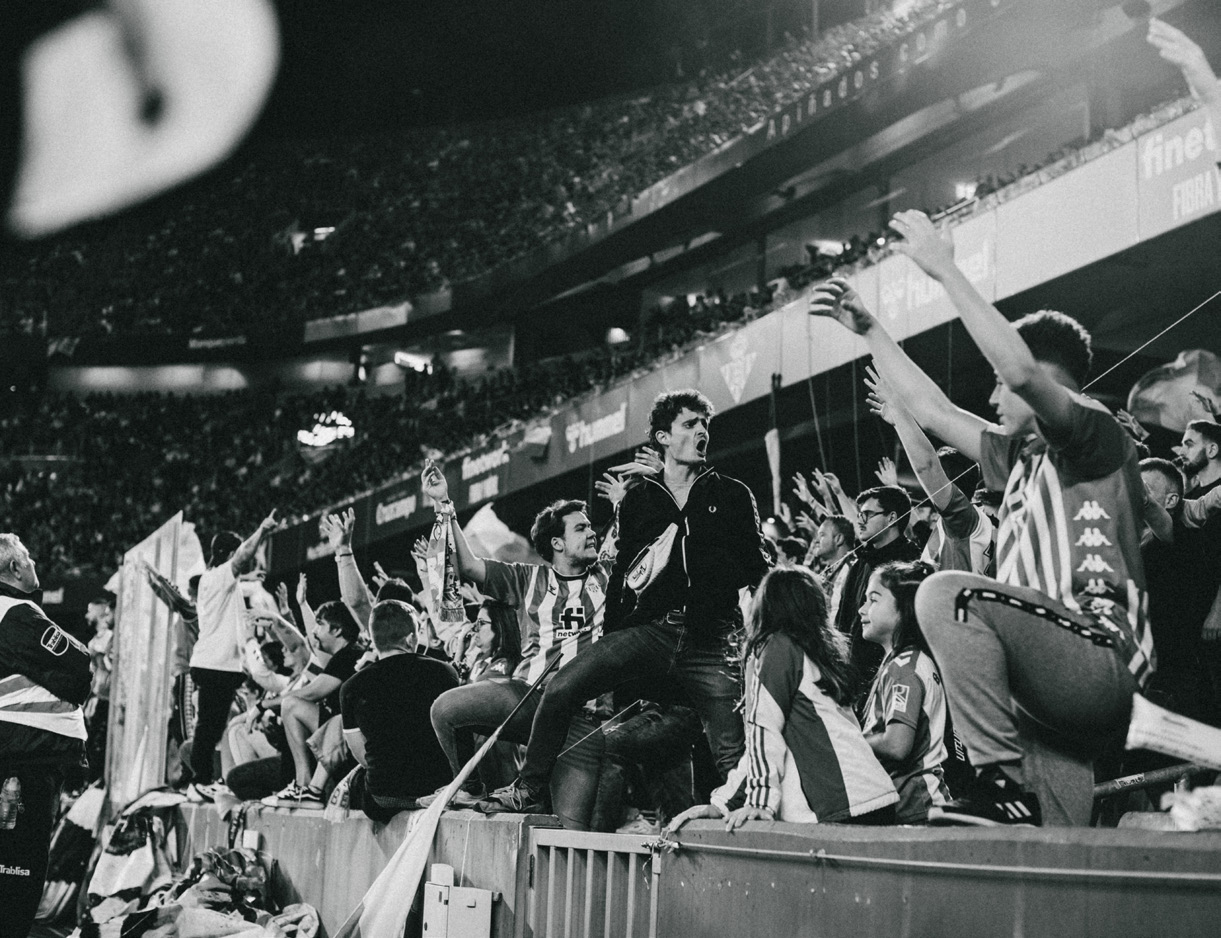
Meanwhile, Betis thanks to their lowly status in the regionalised third-tier, coupled to their being former national champions, were playing week-in, week-out in provincial Andalusian towns. In effect they were taking football to the people and thus drawing massive crowds. Also thanks to their lowly status, a key aspect of what it meant to support Betis was that sense of loyalty in adversity, rather than on-field success.
Not that nobody followed Sevilla and the glamour of their top-flight status ensured they developed a healthy fanbase of their own which persists to this day and is reflected in the fact that while Seville is a city of roughly 700,000 people, its two clubs combined boast socio numbers in excess of 100,000, often splitting families. Two 40,000 plus stadiums sit just 2 miles from one another across the city centre. Seville loves football.
After the drought of fixtures during the 1940s and 50s, the 1960s saw a deluge of derby games, helped by the Copa del Rey draw repeatedly throwing them together. At one point the sides met eight times in less than 18 months. Unsurprisingly the familiarity bred contempt and the rivalry began to heat up. Luis Aragones, who would go on to manage both clubs and the Spanish national team, was a key figure. At that point a striker for Real Betis, Aragones particularly enjoyed El Gran Derbi, netting six times in the 10 derbies he played. The final one being a 3-1 Betis win, in which Aragones opened the scoring and was then sent off for his part in a mass brawl.
Both clubs would enjoy periods of superiority over the next few decades. Sevilla would go 18 years unbeaten at the Ramón Sánchez Pizjuán from 1969 to 1986, while Betis would win their first Copa del Rey in 1977.
Around the turn of the millennium, things heated up again. At the time both clubs had Presidents that enjoyed the limelight.
Betis were being overseen by local businessman Manuel Ruiz de Lopera. A man who liked showing off, six years into his reign de Lopera paid a world record transfer fee (£21.7m) to bring Brazilian superstar Denílson to Betis. Then eight years into his reign, decided to name both Betis’ stadium and training ground after himself.
Neither decision proved to be very enduring. Initially a success, Denílson was part of the Betis side relegated to Segunda in 2000 and by the time he left for Bordeaux in 2005 had become a fringe player. Then, in 2010, Betis reversed de Lopera’s re-naming decisions and went back to calling home the Estadio Benito Villamarín.
Across the city, Sevillian lawyer José María del Nido took the top job at Sevilla in May 2002 and, more enduringly successfully, hired Monchi as Sporting Director in one of his first major decisions. Within three years Sevilla had claimed their first UEFA Cup. However, it was not all positive and only five months after del Nido arrived, Sevilla were hit with sanctions by La Liga after four Sevilla fans, including a child, assaulted a security guard ahead of a derby at the Sánchez Pizjuán.
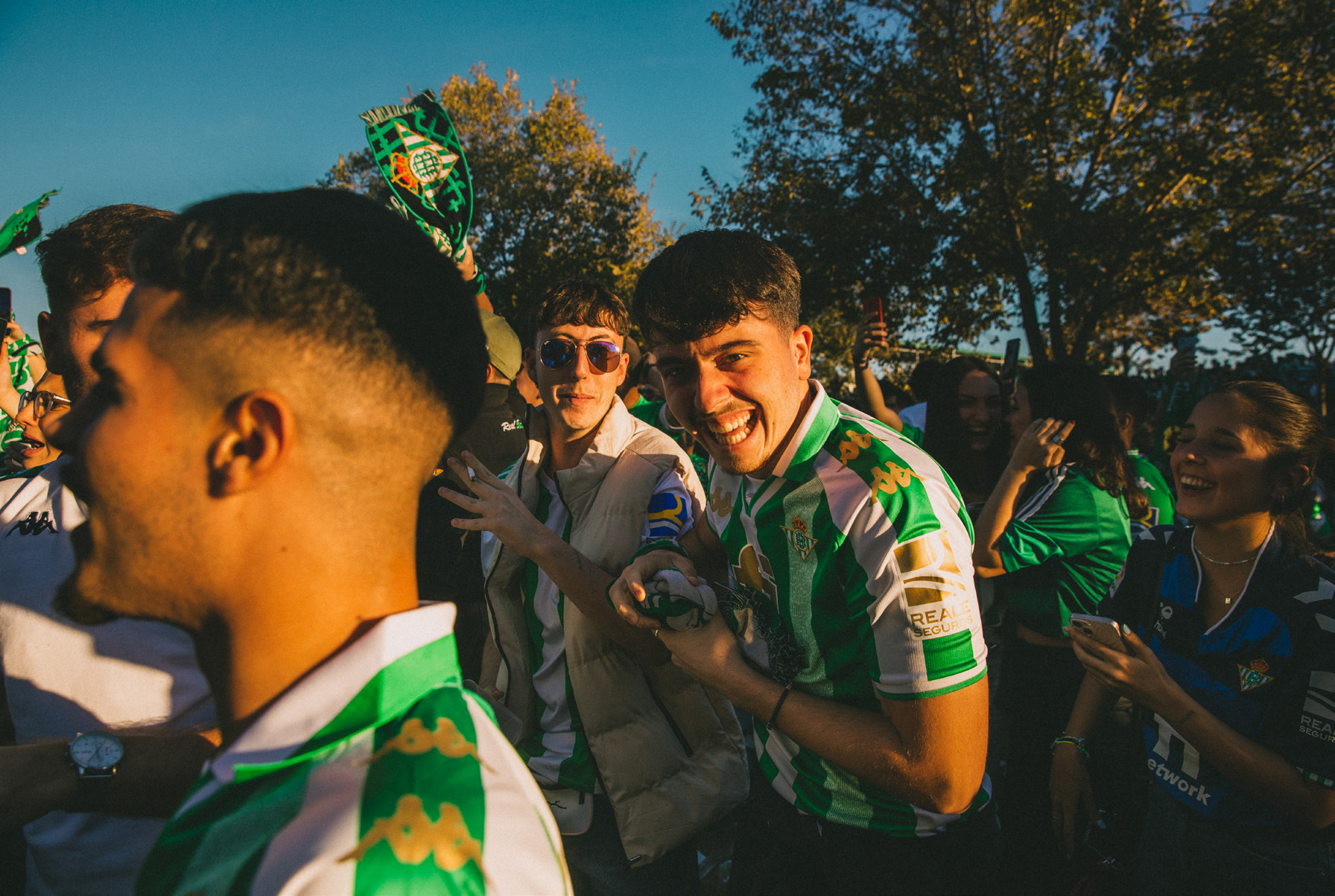

Almost every derby now was ratcheting up the animosity between the two and things reached a nadir in February 2007. The clubs had again been drawn together in the Copa del Rey, meeting in the two-legged quarter finals.
The first leg at the Sánchez Pizjuán finished 0-0, nicely teeing up the return at the Villamarín. With the tie still goalless at half-time Freddie Kanouté opened the scoring 10 minutes after the break, giving Sevilla a valuable away goal. As the away players and bench celebrated, a barrage of missiles rained down from the terraces. One bottle, launched from the third tier, slammed into the head of former Betis and now Sevilla Head Coach Juande Ramos, who was knocked out cold. The match was unsurprisingly abandoned, ultimately being played to a conclusion in an empty-stadium 235 miles away in Getafe weeks later.
It had looked like the derby was reaching a point of no return and heading the way of other major derbies, to be increasingly marred by violence. However, just five months later the mood shifted again as tragedy struck Sevilla FC.
On the opening day of the 2007-08 La Liga season, Sevilla’s homegrown left back Antonio Puerta suffered a cardiac arrest 35 minutes into their game against Getafe CF.
Despite recovering enough to be able to walk to the changing room, Puerta collapsed again and died three days later, aged 22. The city came together in mourning and thousands of fans, of both clubs, lined the route for his funeral.
Puerta’s death led to both clubs adopting a more conciliatory tone and the nasty edge had gone. That is not to say the derbies have lost their passion or drama. It is a fixture that tends to produce classics.
For example, the two league games in 2012-13 saw 12 goals, as first Sevilla pumped Betis 5-1, before the clubs played out a 3-3 draw in the return fixture. Then in January 2018, Betis won 5-3 at Sevilla in a dramatic game that was both the first time Betis had scored five times away from home and their first victory at the Sánchez Pizjuán in seven visits.
Fast-forward to November 2022, and Glory are in attendance of what will prove to be another Villamarín classic – with three red cards (plus a fourth issued to someone on the bench), two goals and a whole host of drama, we experience first hand just why El Gran Derbi gets its name.