
Ahead of the World Cup kicking off, we spoke to Dr Neil Stanley, independent sleep expert at thesleepconsultancy.com, to share his advice for football fans to best overcome the jet lag when travelling out to USA, Canada and Mexico for the World Cup.

He shared his seven top tips to deal with jet lag, as England fans and Scotland fans arrive in Dallas and Boston, respectively.
According to Dr Stanley, any fans travelling to the 2026 World Cup should be aware that it could take over one week to adapt to their new time zone. Dr Stanley said: “It takes about a day to a day and a half for every hour that you've crossed. From here to New York, it could take between five and eight days to fully adapt to the new time. You are going to feel a bit off for quite a while.”
1. ADOPT YOUR NEW TIME ZONE IMMEDIATELY
“When you get there, if it's light, stay awake; if it's dark, go to sleep. That's the simple thing. What you want to do is adopt the local time as soon as you can. Don't look at your watch going, "At home it's midnight and it's five o'clock here." If it's five o'clock and the sun's out, then it's five o'clock as far as you're concerned. It's not midnight. So stop referring back to where you've come from.
“Always change your watch the minute you get on the aircraft. That's including transatlantic flights. The minute you get on the aircraft, adopt the new time if you can.”
2. EAT MEALS AT LOCAL TIME
“The other key thing is to eat at the local time. Your stomach may be saying, "I really don't want to be eating now," but eat something because not only do we have a light-dark clock, which everybody knows about, but we also have a food-related clock. Your body wants to eat food at particular times.
“So adopt the local meal times, even if you don't fancy it. You don't necessarily have to have a three-course meal at what is essentially breakfast time for you, but just eat something.”
3. SOAK UP THE SUNSHINE AND GO FOR A WALK
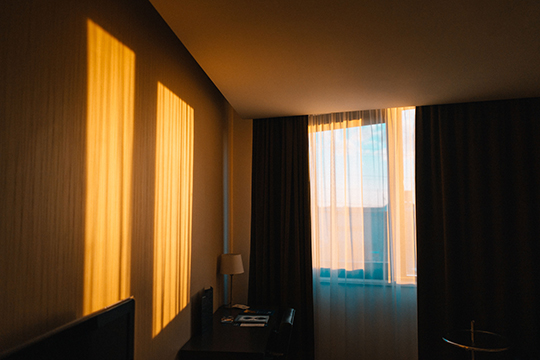
“Sunlight is the best thing to tell your body to be awake. When you wake up, open the curtains, get out into the sunshine, go for a walk, breathe some fresh air and stretch your legs. That's probably the best start to the day you can have.”

4. PRIORITISE YOUR QUALITY OF SLEEP
“Try and prioritise sleep when you are going to get sleep. Use blackout blinds in your hotel room, make sure the curtains are closed, take an eye mask with you, take some earplugs with you because it may be noisy where you are.
“Try and see sleep as part of the trip, because the better night's sleep you can get, the more enjoyment you're going to get out of the tournament. Try and be awake during the day and asleep at night. Don't think, "Nothing's happening this afternoon, I'll have a three-hour catch-up sleep," because that's actually going to do more damage than good.”
5. LIMIT YOUR ALCOHOL
“Alcohol, of course, as a sleep expert, I am absolutely obliged to say that alcohol isn't good for sleep, but for crying out loud, it is the World Cup. It only happens once every four years. Moderate alcohol isn't a problem, but if you want to get a good night's sleep, alcohol is always going to work against that.”
6. CAFFEINE CAN HELP BUT DON'T RELY ON IT
“Use caffeine wisely. Don't use caffeine too late at night because it stays around for five hours or so. If you have an energy drink just before the match, you're going to have the buzz of the match and the buzz of the caffeine, and that will make it very difficult for you to sleep afterwards.
Caffeine earlier in the evening is okay. Caffeine too late at night is going to cause problems when it comes to sleep.”


7. ADOPT THE SAME TACTICS ON YOUR RETURN TO THE UK
“A lot of people make the mistake of landing back at Heathrow first thing in the morning and thinking, 'I'll just have a kip and start everything again tomorrow." That's quite ambitious.
If you get back in the early morning and you are absolutely knackered, then have two hours' sleep before midday and then tough it out until it goes dark again. Of course, in the summer that's going to be around nine or half past nine, so that might seem quite difficult.
“If you make the mistake of having a longer sleep during the day, or a longer nap later in the afternoon or evening, then you are going to affect your adaptation back to home time.
Adopt home time as early as you can.
“If you're flying overnight, try and sleep on the aircraft if you can. Eat at the appropriate times. You might want to eat before you get on the plane because airline meal schedules aren't necessarily how you'd live your life.”