WORDS: ADAM BUSHBY
1. FC Köln v Borussia Mönchengladbach
The rivalry between Köln and Borussia Mönchengladbach grew during the decades when both clubs stood among the strongest sides in Europe. From the 1960s into the 1980s, they supplied West Germany with some of its finest players, from Günter Netzer, Jupp Heynckes and Rainer Bonhof to Wolfgang Overath, Pierre Littbarski and Berti Vogts.

The Ruhr would disagree but, in many ways, the Rhineland helped shape modern German football. The derby has always possessed a different flavour to the Ruhr's intensity. The Rhineland is famous for its humour, self-confidence and love of spectacle. Nowhere is that more obvious than in Cologne, where a live goat named Hennes remains one of football's most beloved mascots.
The story says much about the city itself. The first goat was gifted to Köln by a circus in 1950 during carnival. Legend has it that the goat promptly cocked a leg on player-coach Hennes Weisweiler, ensuring both mascot and manager would forever share a name. We are now on Hennes IX, and the goat has become as much a symbol of Cologne as the cathedral itself. Hennes is everywhere, from memorabilia to the players' tunnel and the club crest. Köln are Die Geißböcke — the Billy Goats.
The rivalry nevertheless runs deep. Supporters have exchanged increasingly elaborate tifo displays for decades, often involving unfortunate depictions of goats and foals. Beneath the humour lies genuine enmity. Part of that animosity stems from success. Weisweiler transformed Borussia from provincial outsiders into one of Europe's finest teams, forcing Köln to watch a neighbour they had long considered their junior become the Rhineland's dominant force.
The fixture has repeatedly justified those emotions. In 1973, the rivals contested what remains one of the most famous DFB-Pokal finals. After 90 minutes it was 1-1; in extra time, Günter Netzer famously substituted himself on before scoring a wonderful winning goal for Borussia. Moments such as that helped elevate the Rhine derby beyond regional importance. The rivalry was already fierce by then and it has remained so.
The practical bit
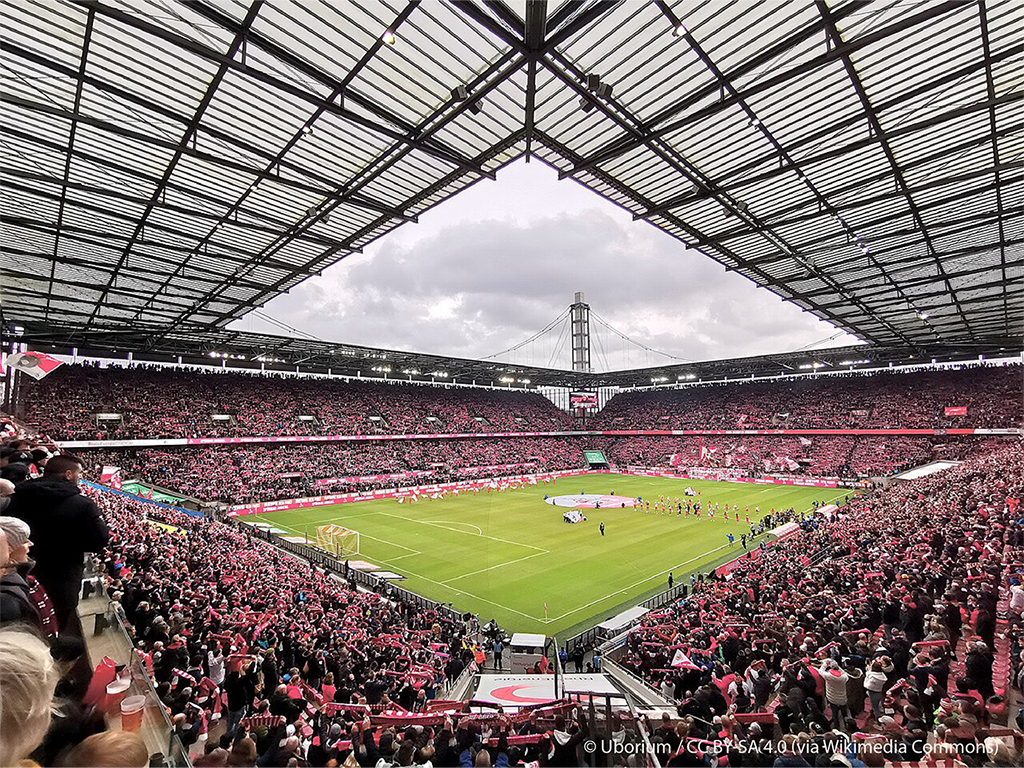
The two clubs are separated by roughly 35 miles, making this one of Germany's compact rivalries. On Sunday 11 October, the 2026 meeting kicks off at 3.30pm at Cologne's RheinEnergieSTADION, so give yourself plenty of time to experience the city before heading west towards Müngersdorf.
The stadium holds 50,000 for domestic matches and is about four miles from central Cologne. The easiest way to arrive is Tram Line 1: pick it up at Neumarkt and ride towards Weiden-West, getting off at RheinEnergieSTADION. Your match ticket also works as a return public-transport ticket on the VRS network, making the tram the obvious choice.
If you are in town for the weekend, make the journey part of the experience. Cologne's football culture starts long before you reach the turnstiles. Traditional Kneipen — small neighbourhood pubs — are where supporters gather over glasses of Kölsch, football on television and the sort of conversation that becomes louder as kick-off approaches.

For an old-school Cologne experience, head to Point One in Ehrenfeld. It is a proper football pub, popular with locals and known for showing almost everything that happens on the pitch. In the Belgian Quarter, Kölschbar offers a more compact version of the same ritual: corner-pub atmosphere, table football and FC matches on the big screen. Zum Goldenen Schuss, also in the Belgian Quarter, is another good option, particularly if you want football followed by a night out. Cologne Tourism also recommends Fridolin-Eck in Neuehrenfeld, a neighbourhood institution where football, Kölsch and conversation are the main attractions.
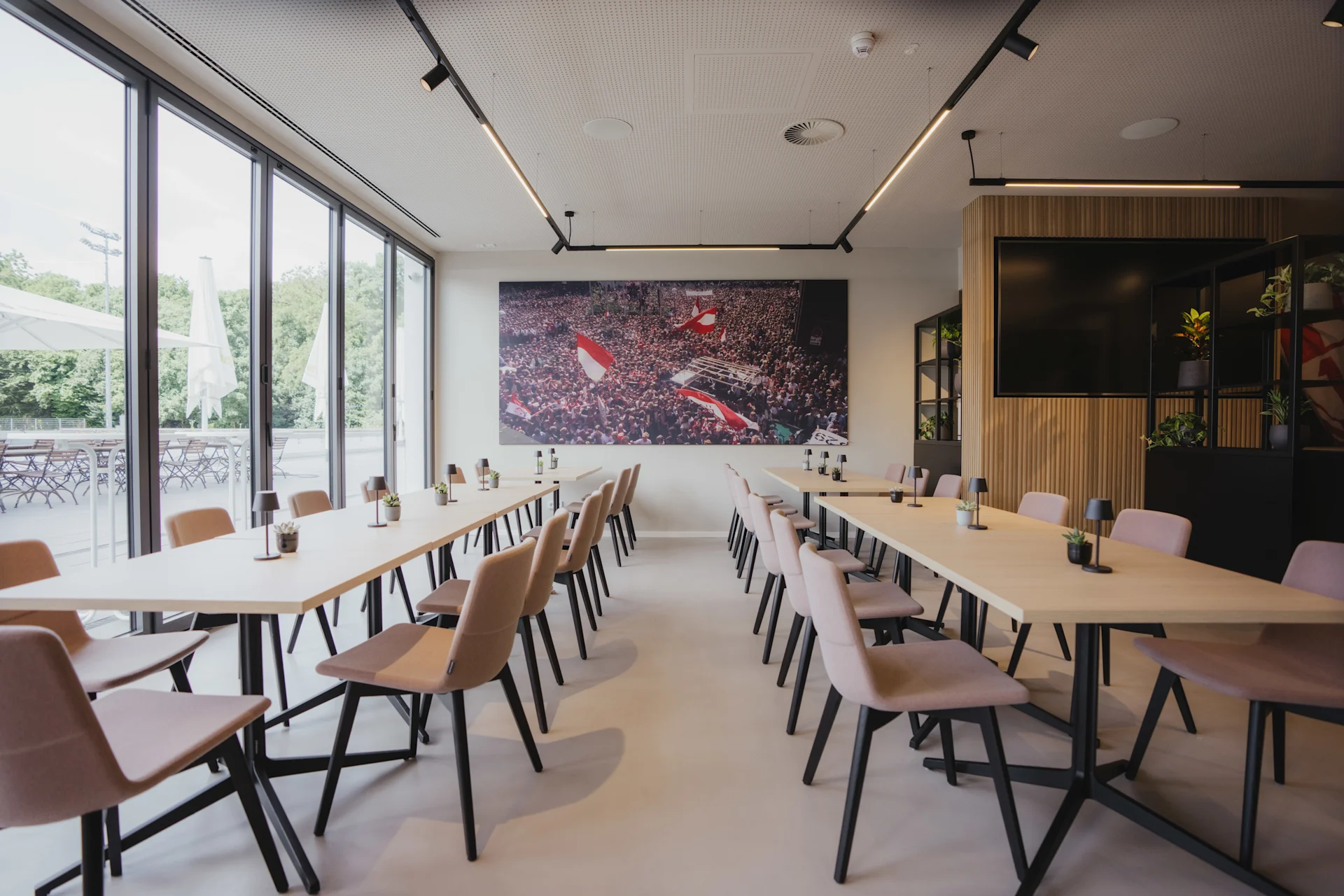
Closer to the stadium, the Clubhaus am Geißbockheim (pictured) sits within the FC's training complex and offers the club experience, surrounded by trophies, history and the unmistakable presence of Hennes. It is the place to go if you want your pre-match drink with a heavy dose of FC mythology.
Tickets are the tricky part. The derby is a high-demand fixture and FC members receive advance access, so travellers should not assume they can simply turn up and buy a ticket. The club's official ticket exchange is the place to watch: it releases seats returned by season-ticket and day-ticket holders and can offer a route into sold-out matches. Buy through official channels only. The club says around 3,000 tickets are offered through the exchange per match, so persistence can pay off.
If you do get inside, arrive early. The stadium opens from 1.30pm for the 3.30pm kick-off, giving you time to find your seat, absorb the noise and watch the crowd build. Then comes Mer stonn zo dir, FC Kölle, the club anthem whose melody comes from Loch Lomond. When almost 50,000 people sing it together, the stadium stops feeling like a concrete bowl and starts feeling like a civic gathering.
The atmosphere is passionate and the rivalry is serious, so treat the stadium as you would any intense derby. If you have a home-sector ticket, don't arrive wearing Borussia colours or obvious away merchandise. Follow stewarding instructions, stay out of restricted areas and let the ultras create the spectacle without becoming part of it.
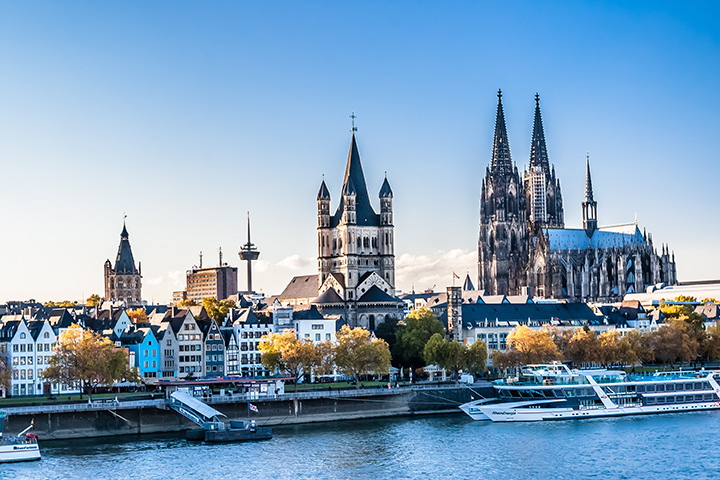
But don't make the mistake of thinking the Rhine derby begins or ends at the stadium. Cologne is a city that treats football as part of its wider identity tied to carnival, beer, music, neighbourhoods and an almost comic level of local pride. The goat on the crest is funny until you realise how seriously everyone takes what it represents.
That is what makes this a particularly rewarding derby to visit. You get the history of two clubs that once dominated German football, the theatre of a rivalry that produced Netzer's extraordinary intervention and a matchday culture that spills naturally into the city around it.